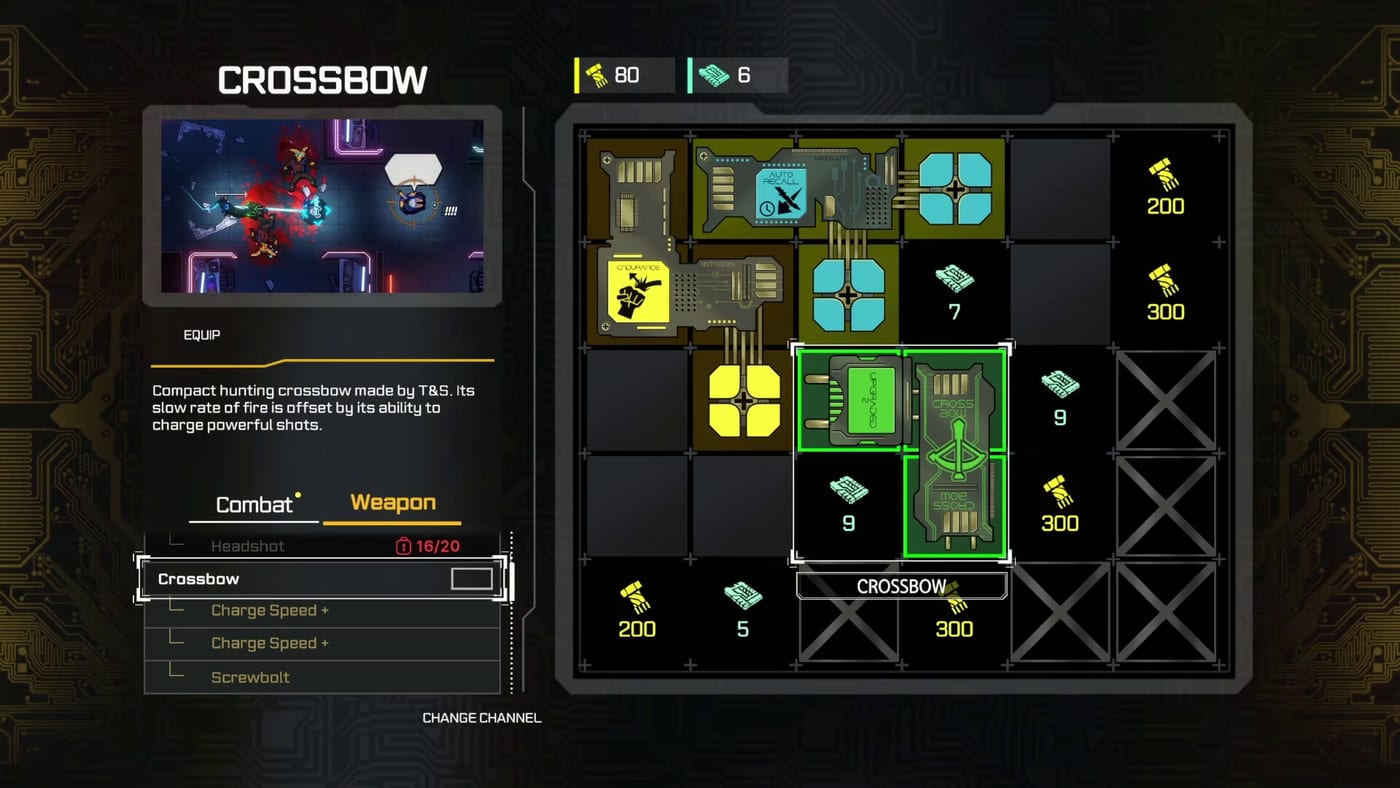
Kusan City of Wolves Weapons Tier List
Estimated S/A/B ranks from demo and public info—re-test after patches before the July 30 2026 launch.
This featured Weapons Tier List ranks tools in Kusan: City of Wolves for planning Bolts and loadouts, not for starting arguments. CIRCLEfromDOT and PQube’s hardcore top-down shooter rewards mastery of the War Hand, the auto-targeting Quantum Knife, and a rotating firearm kit across 54 stages. Because the full game launches July 30, 2026 and balance can still move, every rank below is an estimate drawn from demo feel and public marketing—not a datamined final chart. Revisit after patches. Use it with the Builds Hub, Loadout Builds, and War Hand Upgrades.
How to read the tiers. S-tier: repeatedly enables clean, stylish clears across mixed room shapes with manageable risk in a one-hit-death ruleset. A-tier: excellent in the right chapter geometry or boss pattern, slightly more situational elsewhere. B-tier: workable and sometimes preferred by specialists, but asks more positioning, Bolts investment, or forgiveness than the ranks above. Within a tier, order is loose. Your binds and aim platform matter—mouse players may elevate precision guns while pad players elevate forgiving spray or knife-centric kits. Confirm comfort in the live demo before locking a main.
S-tier estimates. Quantum Knife (toolkit core): auto-targeting throws that delete priority threats when you stand in honest sightlines; upgrades that deepen knife combat are rarely wasted because style scoring and pack thinning both love it. War Hand (utility-combat hybrid): not a conventional “gun,” yet it belongs in S for route breaking and finishers that keep stages moving; under-leveled fists drag every other weapon down. A reliable mid-range primary firearm from the demo pool that lets you strafe while tracking elites also belongs in provisional S if it offers controllable recoil and quick time-to-kill without long recovery—identify your personal “default rifle/SMG analogue” by which gun you survive longest with, then treat that as S until a patch says otherwise.
A-tier estimates. Close-range power firearms that melt targets but punish whiffs in open arenas. Longer-range precision picks that shine in corridors yet struggle when packs surround you. Situational heavy tools that devastate bosses such as those framed in marketing around DJ Garak or Hoban but feel clumsy in tiny rooms. Knife-adjacent skills that specialize in multi-target chains after you already own the basics. A-tier is where most players should experiment once a safe S core exists. Swap A picks based on the next chapter’s shape using Stages Overview rather than forcing one gun through all 54 stages.
B-tier estimates. Novelty or high-commitment weapons that look spectacular in trailers yet demand perfect spacing. Tools with long recoveries that conflict with one-hit reality. Early unlocks you outgrow but may keep for comfort. B does not mean “vendor trash”—it means “know why you are carrying this.” Some S-Rank specialists will clear with B weapons out of mastery; beginners should not start there while still learning parries.
Role matrix instead of pure DPS worship. Thinning: Quantum Knife and wide gun patterns. Anchoring: stable mid-range fire. Breaking: War Hand. Punishing: finishers and high-burst guns on staggered targets. Scoring: whatever combo lets you stay aggressive without eating a stray bullet. If a weapon only fills one role poorly, demote it in your personal list even if a friend swears it is S.
Boss and chapter modifiers. Early chapters teach fundamentals—favor forgiving S/A guns and essential fist nodes while following Early Chapters. Mid chapters raise density—promote weapons that turn corners quickly. Boss arenas—consult the Boss Guide and temporarily elevate whatever tool best answers the tell you keep missing. Do not rebuild your entire tier philosophy for one kingpin; slot in one A-tier specialist and keep the S core.
Bolts and tier climbing. Unlocking a flashy A/B weapon before upgrading knife reliability often feels like a downgrade. Spend first on making S-tier tools trustworthy, then buy variety. Track whether a new gun actually reduces deaths over five demo attempts; if not, its marketing tier does not match your hands. Pair economy sense with Loadout Builds archetypes so Knife Conductors do not waste Bolts on fist-only toys they never press.
Methodology caveats (read this twice). We do not invent fake DPS numbers or non-public magazine sizes. We do not copy unverified third-party databases. Ranks will be updated when community consensus and patch notes stabilize after launch. Until then, treat this page as a structured opinion board grounded in demo lessons: knife and fist identity are central, firearms are modular, and S-Rank is mostly execution. Stabilize Controls Hub layouts before chasing meta swings.
Action checklist. Pick one S firearm you can aim under stress. Keep Quantum Knife practiced every room. Keep War Hand upgrades aligned with pathing pain points. Add one A-tier experiment per chapter. Bench B-tier until fundamentals click. Re-rank privately after each patch. That loop beats screenshot-tier-lists that ignore how Kusan actually kills you—one mistake at a time.
Frequently Asked Questions
Quick answers to the most common questions.
Is this tier list official?
No. It is a fan estimate from demo feel and public marketing ahead of the July 30, 2026 release. Always re-test in your build.
Why is War Hand ranked with weapons?
Because fist pathing and finishers change clear quality as much as guns. See [War Hand Upgrades](/builds/war-hand-upgrades/) for spend order.
Should I only use S-tier?
Use an S core for consistency, then try A-tier specialists for bosses or awkward stage geometry.
Will ranks change after launch?
Almost certainly. Patches, new unlocks, and full-campaign context will reshuffle A/B especially.
How do I apply this to a loadout?
Follow an archetype on [Loadout Builds](/builds/loadouts/) and slot tier picks into those roles instead of carrying five overlapping guns.